Namma Analysis is a trading-focused blog covering Nifty, Bank Nifty, Sensex, options trading, and forex markets. We provide daily pre-market analysis, intraday trade breakdowns, and price action strategies based on real market behavior. Learn key support and resistance levels, trend analysis, and disciplined risk management to identify high-probability setups and improve consistency across equity, derivatives, and currency markets.
Why Breakouts Fail in Bank Nifty – Namma Analysis | XM Broker | Telegram
Why Breakouts Fail in Bank Nifty Most of the Time
If you’ve traded Bank Nifty for even a few weeks — you already know the pain.
📉 The moment you enter a breakout trade, the market reverses like it was waiting for you.
It’s frustrating. It feels personal. But it’s not random.
Breakouts don’t fail by accident. They fail because most traders don’t understand what’s really happening behind the charts.
The Reality: Breakouts Are Designed to Trap You
Most retail traders are taught one simple rule: “Buy above resistance, sell below support.”
Sounds logical, right? But everyone is doing the same thing. And the market doesn’t reward obvious behavior.
When price reaches a key level in Bank Nifty, big players already know: Retail traders will place buy orders above resistance, stop losses will be sitting just below that level — liquidity is ready to be grabbed.
👉 Price breaks the level → retail enters aggressively → big players dump positions → price reverses. Your “perfect breakout” turns into a perfect trap.
Liquidity Hunting: The Real Game
Breakouts fail because the market runs on liquidity, not patterns. Think like a smart money player: If you want to enter a large position in Bank Nifty, you need buyers when you want to sell, and sellers when you want to buy.
Where do you find them? At breakout levels.
Sudden spikes above resistance, quick reversals, long wicks — those wicks are not random. They are signs that liquidity has been taken and the move is over.
Low Timeframe Noise (Your Biggest Enemy)
Most traders jump into breakouts on the 1-minute or 5-minute chart. That’s where things go wrong. On lower timeframes: too much noise, fake moves are common, algo trading dominates.
What looks like a breakout is often just a temporary push, not a real move. Experienced traders don’t blindly trust small timeframe breakouts — they wait for higher timeframe confirmation.
Timing Matters More Than You Think
Not all breakouts are equal. In Bank Nifty, timing plays a huge role:
Early morning moves are volatile and deceptive
Mid-session becomes slow and choppy
Expiry days are extremely manipulative
If you’re taking breakouts at random times, you’re gambling. A breakout at 9:20 AM behaves very differently from one at 2:30 PM.
The Psychology Trap
You see price breaking a level and your mind says: “If I don’t enter now, I’ll miss the move.”
That fear of missing out (FOMO) forces you to enter late. And guess what? That’s exactly when the move ends.
Breakouts punish impatience, overconfidence, and emotional trading. The market rewards discipline, not speed.
Lack of Confirmation (Biggest Mistake)
Most traders take breakouts based on one candle. That’s weak thinking. A strong breakout should have: volume support, follow-through candles, structure shift.
Without confirmation, you’re just guessing. And guessing in Bank Nifty is expensive.
Why Your Breakout Strategy Keeps Failing
Let’s be brutally honest. Your strategy is failing because:
You enter too early
You ignore higher timeframe levels
You don’t wait for confirmation
You trade every breakout you see
You let emotions control decisions
It’s not the market. It’s your execution.
What Actually Works (Simple but Powerful)
✅ Wait for the breakout → then wait for a pullback
✅ Trade only when the level holds after breakout
✅ Use higher timeframe levels (like 4H range)
✅ Focus on fewer, high-quality trades
✅ Combine price action with indicators like EMA
This small shift changes everything. You stop being the trapped trader… and start thinking like the one setting the trap.
🎯 Final Thought
Breakouts don’t fail “most of the time” because they are useless. They fail because most traders use them blindly.
Once you understand: Liquidity · Timing · Confirmation · Psychology — you stop losing.
🚀 Bank Nifty Breakout Rule
✅ Clear range exists (multiple touches)
✅ Break + retest confirmed
✅ Higher timeframe not against you
✅ Volume & follow-through present
Otherwise:
❌ STAY OUT
No guesswork. Just patience and confirmation.
📊 Trade with XM Global – Trusted Broker
Low spreads • Instant execution • Regulated • Perfect for Bank Nifty & Index trading
Best forex broker for Indian traders — low spreads, instant execution
Let’s not pretend. Most people entering trading are not full-time traders. They are: working 9–6 jobs, checking charts secretly in office, trying to build a second income. And the biggest frustration is: “I don’t have time… can I still make money?” Yes — but only if you stop thinking like a beginner.
First — Understand the Game (Not Just Trading)
Forex trading is not about clicking buy/sell. If that was enough, everyone would be rich. It is about understanding where money is flowing, understanding why price moves, managing your risk when you are wrong, and staying consistent even after losses.
Real Truth: You can be right 40% of the time and still make money. You can be right 70% of the time and still lose money. Why? Because risk management matters more than accuracy.
⚠️ Forex in India — The Truth (No Confusion)
Officially, India allows only INR pairs (USD/INR, EUR/INR). But here's the ground reality: most traders don't trade INR pairs seriously because movements are slow and profit opportunities are limited. So what do traders do? They move to global markets using brokers like XM — bigger price movement, more trading opportunities, better liquidity, access to gold, indices, and major forex pairs. This is where the real action happens.
📊 What is XAUUSD? (Deep Explanation)
XAUUSD = Gold vs Dollar. But don't think of it as "just gold". Think of it as a market driven by fear, news, and global money. Gold reacts to inflation, interest rates, war/global tension, and USD strength. Example: If inflation increases → money loses value → people move to gold. If USD becomes weak → gold rises.
Practical Trade Example:
Gold at 2000 (strong resistance). You see rejection candle → SELL. Price falls to 1985 → that's 15 points. If you use proper lot size, even 10–20 points can give strong returns. This is where a broker like XM helps with tight spreads so your profits aren't eaten away.
⚖️ Leverage — Power or Trap? (Deep Reality)
I've seen a friend blow ₹50,000 in one hour because he used 1:500 leverage without understanding risk. He saw a 1% move against him and his account was gone. Leverage amplifies profits and losses. Smart use? Small lot sizes, don't go all-in, focus on survival not fast profit. Brutal truth: if you chase high leverage, the market will humble you.
💰 Spread — The Silent Killer
Spread is your entry cost. You buy at 1.1000, sell at 1.0998 — you are already in loss. Beginners lose here because they trade small moves. Smart approach: trade during active sessions (London + NY overlap), avoid low volume time, focus on bigger moves. On XM, spreads go as low as 0 pips, which saves you thousands over time.
⏰ Market Timing — This Changes Everything
Forex is 24 hours, but opportunity is NOT 24 hours. Asian session slow, London active, New York explosive. Best time for Indian traders: 6:30 PM – 11:30 PM (London + NY overlap) — high liquidity, big moves. Example: morning market moves 10 points, evening moves 50+ points. That's where you should trade.
💼 Why Most Working Professionals Fail
Let's be brutally honest. It's not lack of time. It's lack of discipline. Most open charts randomly, enter without a plan, exit emotionally, overtrade. What they should do: wait, observe, execute only when setup comes.
🧠 How a Smart Working Trader Operates Step 1 — Planning (15 minutes): Open 4H chart, mark support & resistance, identify trend. Step 2 — Execution (30–60 minutes): Wait for price to reach your zone, look for confirmation, enter trade. Step 3 — Management: Set Stop Loss, Set Target, Leave trade. No over-monitoring, no emotional exits.
Deep Example Trade (Professional Thinking)
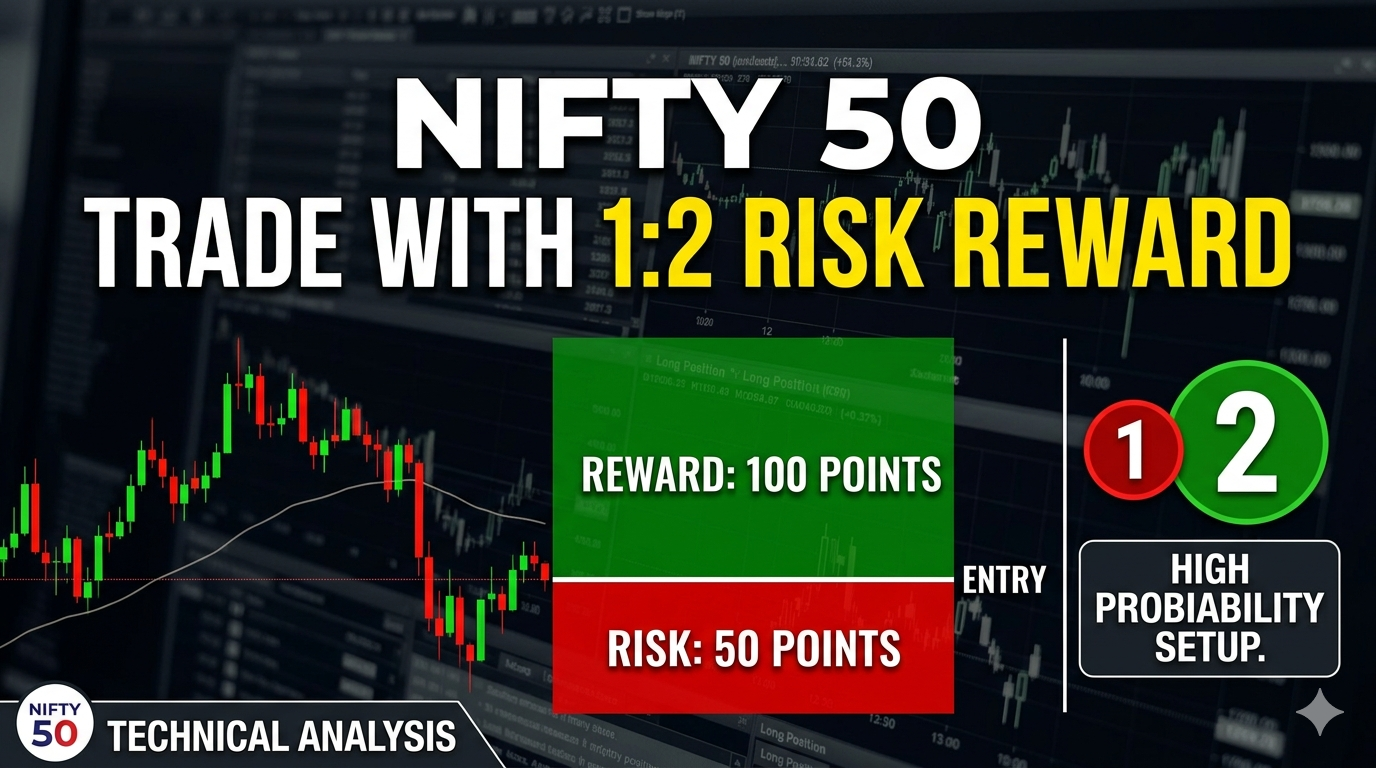
Resistance at 1.1000. Price breaks → retests. You BUY. Entry: 1.1005, SL: 1.0985, Target: 1.1045. Risk: 20 pips, Reward: 40 pips. Even if you lose 2 trades and win 1 trade — you are still profitable. This is the math of consistency.
Biggest Mistakes
1. No Stop Loss → one bad trade, account gone.
2. Overtrading → more trades ≠ more profit, more mistakes.
3. High Leverage → fast gains, faster losses.
4. Following signals blindly → no control.
Can You Make Money with Limited Time?
Yes — but only if you trade less, think more, act only on strong setups. Example: 1 trade per day, 1:2 risk reward. Even with 50% accuracy → you grow.
💸 Deposit & Withdrawal — Real Explanation
What beginners fear: "Will I get my money back?" Reality: deposits are fast, withdrawals take 1–3 days on most brokers. On XM, I've personally withdrawn multiple times — it reaches your bank within 24-48 hours. Mistakes: using random payment methods, not verifying account. Smart move: use same method, start small, test withdrawal early.
🔥 Start Your Forex Journey with XM — The Right Way
Low spreads, 1:1000 leverage, instant deposits, and 24/7 support. Trusted by millions globally.
Best forex broker for Indian traders — regulated, reliable, and built for professionals
🧠 Psychology — The Real Game
This is what nobody tells you. The market is not your enemy — your mind is. Problems: fear, greed, impatience. Example: you see profit → exit early. You see loss → hold longer. This kills accounts. Solution: fixed plan, fixed risk, no emotions.
🎯 Final Truth
Trading is not about time, tools, or indicators. It is about discipline, patience, and risk control. You don't need more time. You need better execution. If you master charts, risk, and discipline — even a busy person can win in trading.
📈 Stay connected for real-time setups, market insights, and high-quality trade ideas — because in trading, timing is everything.
Disclaimer: For educational purposes only. Trading involves risk. Past performance does not guarantee future results. Please consult your financial advisor.
🔔 Don't miss the next big market move — tap the bell at the bottom of your screen & stay ahead of 90% traders.
📌 The reality of forex trading in India – things you *must* know before entering
If you've been around trading for a while, you've definitely seen charts of XAUUSD (Gold), EURUSD, or USDJPY moving like crazy. Big candles, fast profits, and traders claiming they made money in minutes. It looks exciting. It feels like an opportunity.
But here's the uncomfortable truth — most Indian traders jumping into this space don't fully understand what they're getting into, especially from a legal and financial standpoint. Let's break this down properly, without any filter.
What is Forex Trading, Really?
Forex trading is simply the exchange of one currency for another with the intention of making a profit. Currencies are always traded in pairs. For example: EUR/USD (Euro vs US Dollar), USD/JPY, XAU/USD (Gold vs US Dollar). When you buy EUR/USD, you expect the Euro to strengthen. When you sell, you expect the opposite. Simple on paper – but that's exactly why beginners underestimate it.
🔥 Why Forex Looks So Attractive
Forex is the largest financial market in the world. Always movement, always opportunity. It runs almost 24 hours. You can start with small capital. High leverage gives the illusion of big profits. And instruments like gold (XAUUSD) move aggressively. For someone sitting in India, watching gold move hundreds of points in a day feels like missing out on easy money. But that's where reality hits differently.
The Truth: Forex Trading is NOT Fully Open for Indians
There's a huge misconception: "Forex trading is banned in India." That's not true. Forex trading is allowed — but only under strict conditions.
✅ What You Are Actually Allowed to Trade
As an Indian resident, you can legally trade only certain currency pairs through regulated Indian exchanges like NSE or BSE. These include:
USD/INR
EUR/INR
GBP/INR
JPY/INR
These trades are regulated, transparent, and fall under Indian financial laws.
⚠️ What Most People Are Doing Instead
Most retail traders in India are not trading INR pairs. They are trading XAUUSD (Gold), EURUSD, GBPUSD – using foreign brokers through MT4 or MT5. This is where things go off track. Trading these international pairs from India through offshore brokers violates FEMA (Foreign Exchange Management Act). This is not a "grey area" – it's a clear regulatory violation. Most traders ignore this because "everyone is doing it" and "withdrawals are working fine". But just because something works today doesn't mean it's safe.
🏦 Why the Government Restricts This
There are solid reasons behind these rules. 1. Control over capital flow – large money moving to foreign brokers affects financial stability. 2. Protection of retail traders – high leverage (1:100, 1:500) makes losses faster and deeper. 3. Stability of the Rupee – unregulated forex participation can impact the value and volatility of the Indian currency.
📉 Then Why Do Traders Still Go for XAUUSD?
Because it moves fast. Gold offers high volatility, bigger profit potential, frequent trading opportunities. But what traders don't talk about is: sudden losses, overtrading, emotional decision-making, and most importantly – zero protection if something goes wrong. If your broker blocks withdrawal, who will you complain to? No one.
If You Trade Legally (INR Pairs)
Income treated as business income. You pay tax as per slab, can claim expenses, carry forward losses. Clean and structured.
If You Trade XAUUSD, EURUSD
Not FEMA compliant. Income is still taxable (other sources / speculative), but your activity itself is legally misaligned. A risk most traders don't think about.
💣 The Hard Reality
Forex trading is not easy. It's not about indicators or signals. Most people lose because they over-leverage, trade without a plan, chase quick money, and ignore rules – both trading and legal. If you combine bad strategy with legal ignorance, you're setting yourself up for failure from both sides.
🧭 A Human Take – Not a Warning, Just a Conversation
Look, I'm not here to scare you. I've seen traders make money on XAUUSD. I've also seen them lose everything – not just because of the market, but because they never knew the rules until it was too late. If you still choose to trade international forex, at least know what you're walking into. But if you want to trade clean, stay with regulated INR pairs. Your future self will thank you.
📢 Get daily markets breakdown – not noise, just clarity
📌 Things you should know before trading – Nifty premap insights
The Indian market is heading into today’s session with mixed emotions. On the surface, everything looks calm. GIFT Nifty is showing a flat‑to‑positive opening, global markets are stable, and crude oil prices have cooled slightly. But experienced traders know one thing very clearly — the market becomes the most dangerous when it looks “too comfortable”.
That’s exactly the kind of environment we are entering today. After the recent volatility near the 24,000 zone, buyers are trying to push higher, while sellers are waiting near resistance to trap aggressive breakout traders. Patience matters more than excitement.
🌍 Global Market Sentiment
Overnight, global markets remained mostly stable. Asian markets traded in green territory, and U.S. futures also showed signs of strength. One major reason behind this positivity is the temporary cooling of geopolitical tensions in the Middle East. Crude oil prices have softened slightly after reports of improving diplomatic discussions between the U.S. and Iran. For Indian markets, lower crude oil prices are always considered positive.
At the same time, foreign institutional investors (FIIs) continue to sell aggressively in Indian equities. This is one of the biggest reasons why the market is struggling to sustain strong upside momentum despite positive global cues. This creates a confusing environment — one side bullish, the other quietly weak. And that’s where emotional traders lose money.
📊 Nifty Technical Outlook
Nifty is currently trading near an important psychological zone around 24,000. This level has become a battlefield between buyers and sellers. Every time the market approaches this zone, volatility increases sharply.
🔴 Resistance Zones
24,000 / 24,120
🟢 Support Zones
23,780 / 23,650
If Nifty sustains above 24,000 with strong volume, we could see momentum buying. But if the market fails once again near resistance, profit booking may drag indices lower very quickly. This is not the kind of market where you blindly chase green candles. The opening move may not be the real move.
🏦 Banking Sector Still Looks Weak
Private banking stocks, especially HDFC Bank, have failed to provide strong support to the index in recent sessions. Whenever Bank Nifty stays weak, Nifty struggles to build strong momentum. ICICI Bank and HDFC Bank will remain crucial stocks to watch today.
💻 IT Sector Showing Relative Strength
Wipro is in focus after fresh AI partnership announcements. Positive sentiment in U.S. tech markets is also helping. Infosys and TCS may attract buying interest if Nasdaq futures remain positive. Sometimes the market gives opportunities quietly – IT stocks are starting to do exactly that.
🚛 Auto gaining momentum
Ashok Leyland strong quarterly numbers. Tata Motors watching closely. Rotational money flowing away from banking into auto.
⚡ Adani stocks – high volatility
Adani Enterprises and Adani Total Gas move fast in both directions. Greed destroys traders faster in volatile stocks – risk management over prediction.
🎯 What traders should actually focus on today
Most retail traders lose money because they react emotionally to opening candles. Professional traders wait, observe, and let the market reveal its intention first. Today feels like a session where fake breakouts can easily trap impatient traders. If volume does not support the move, sudden reversals are possible.
✅ Wait for proper range breakouts.
✅ Watch if volume supports the move.
✅ Observe Bank Nifty strength carefully.
✅ Avoid emotional entries during the first minutes.
Sometimes the best trade is the trade you avoid.
🧭 Final Thoughts – Stay Patient, Not Paranoid
Global cues supportive. IT & auto showing strength. But banking weakness + FII selling create hidden pressure. This is not a day for aggressive gambling – it’s a day for discipline. The traders who stay patient today may find the cleanest opportunities once the market chooses its direction clearly.
👉 And the ones who rush emotionally at market open may once again become liquidity for smarter participants. Protect capital first. Opportunities always come again.
📢 Get real-time premarket analysis & live trade setups
📊 Tata Tiago EV Facelift 2026 | EV Strategy & Stock Impact Analysis
Tata Motors just dropped the 2026 Tiago EV facelift at ₹6.99 lakh, and on the surface, it looks like a typical refresh — new features, updated design, more tech.
But if you're only seeing it as a "car launch," you're missing the bigger picture.
This isn't just about selling more hatchbacks. This is Tata quietly strengthening its grip on India's EV entry segment — and that has direct implications for the stock.
🔧 First, Let's Talk About the Car (Because It Actually Matters)
The Tiago EV facelift now gets:
Cleaner, sharper designBigger infotainment screenWireless Android Auto & Apple CarPlay360° cameraFaster charging supportBetter interior finish
For enthusiasts, this is important. Earlier, entry-level EVs felt like compromises. Now, Tata is making sure even its cheapest EV doesn't feel "cheap." That's how you build mass adoption.
🔋 Lifetime Battery Warranty — This Is the Real Weapon
🔋 Tata offering a lifetime battery warranty is not just a feature upgrade — it's a psychological move.
The biggest fear for Indian buyers is NOT range. It's: "What if the battery dies after a few years?"
Tata just attacked that fear directly.
From an enthusiast perspective: confidence increases, resale perception improves, EV ownership feels safer.
From an investor perspective: conversion rate improves, first-time buyers enter faster, brand trust compounds. This is how market leaders stay ahead — not by specs, but by removing friction.
📈 Now Let's Get Real — What Does This Mean for Tata Motors Stock?
Short-Term Reaction: Don't Expect Fireworks
A facelift launch rarely moves the stock in a big way. Institutional investors don't care about touchscreen upgrades or cosmetic changes. They care about volumes, margins, and execution.
📊 What Actually Matters for the Stock
1. Will This Increase EV Volumes?
Tiago EV sits in the most sensitive segment — price-conscious buyers. If bookings increase, adoption improves, and repeat demand comes — then this facelift starts contributing to real growth.
2. Can Tata Defend Its EV Leadership?
Right now, Tata is still leading India's EV market. But pressure is building from Mahindra, MG, Hyundai, BYD. The Tiago EV facelift is not about expansion — it's about defending territory.
3. Profitability — The Real Make or Break Factor
Affordable EVs are NOT high-margin products. So even if Tata sells more Tiago EVs: revenue goes up, but margins may stay tight. Smart investors track: "Is Tata making money per car, or just selling more units?"
4. Battery Warranty — Hidden Risk?
While lifetime warranty sounds great for buyers, investors should think: What's the long-term cost? Will warranty claims hurt margins? If managed well → huge competitive advantage. If miscalculated → margin pressure later.
🎯 Bigger Picture: Tata's EV Game Plan
This launch fits perfectly into Tata's larger strategy:
Own the entry segment (Tiago EV, Punch EV)
Dominate mid-range (Nexon EV)
Expand into premium EVs
This is smart layering. Because once a customer enters the Tata EV ecosystem: brand stickiness increases, upgrade cycle stays within Tata, long-term value compounds.
⚖️ So… Bullish or Not?
📈 Bull Case
EV adoption in India is still early
Tata already has first-mover advantage
Product upgrades keep demand alive
Brand trust improving with battery warranty
📉 Bear Case
Competition will intensify
Margins may stay under pressure
EV pricing wars can start
High capex across EV ecosystem
🎯 Final Take (No Hype)
This launch alone will NOT move Tata Motors stock dramatically.
But it does something more important: 👉 It strengthens Tata's position in the EV race.
For traders: This is not a trigger event. Watch price action, not headlines.
For investors: This is a positive signal of execution consistency.
The Indian stock market remains closed today, May 28, 2026, on account of Eid al-Adha (Bakri Id). Trading on both the National Stock Exchange (NSE) and Bombay Stock Exchange (BSE) is suspended across equity, derivatives, and currency segments.
Commodity traders should note that MCX may operate only during the evening session.
🌍 Global Cues Still in Play
Even though Indian markets are shut, global markets are active and continue to influence sentiment.
Rising geopolitical tensions between the United States and Iran have kept investors cautious. In the previous session, Indian indices showed weakness, with banking stocks dragging the market lower.
👉 This means the next trading session could open with volatility depending on how global markets behave overnight.
📢 Latest Market Statements & Stocks in Focus
Analysts Expect a “Stock Picker’s Market”
Brokerages are signaling a shift in market behavior. Instead of a broad rally, experts believe the market is moving towards a stock-specific opportunity phase.
PowerPharmaMetals
HDFC Bank Still a “Buy on Dips”
Despite recent pressure in banking stocks, analysts continue to back HDFC Bank as a strong long-term play.
⚠️ Short-term weakness does not change fundamentals — but this is where most traders get trapped, confusing long-term investing with short-term trading.
Apollo Micro Systems in Momentum Zone
Defense stock Apollo Micro Systems remains in strong focus after a sharp rally backed by earnings growth and sector momentum.
⚠️ Momentum traders are chasing it — but chasing extended moves without structure is exactly how traders get trapped at the top.
💰 Penny Stocks Seeing Heavy Activity
Retail traders are aggressively moving into penny stocks again — chasing quick gains.
Let's be blunt — most people trading penny stocks are not investing, they are gambling.
Here's what actually happens:
Low liquidity = easy manipulation
Operators create fake momentum
Retail traders enter late
Smart money exits
👉 If you don't understand volume, delivery, and structure — you are the liquidity.
📈 What Traders Should Expect Next
After a holiday, markets often react sharply. Be ready for:
Gap-up or gap-down opening
Reaction to global news
Volatility in banking and defense stocks
Momentum continuation in selected stocks
👉 This is where disciplined traders wait for confirmation — not jump blindly at open.
🧠 Smart Move Today
Instead of doing nothing or overthinking:
✅ Review your last 10 trades
✅ Identify execution mistakes
✅ Refine your entry rules
✅ Prepare watchlist for tomorrow
That's how professionals use market holidays.
🌙 Eid Mubarak!
Wishing you and your family a peaceful and prosperous Eid al-Adha. May this festival bring clarity, discipline, and success — not just in life, but in your trading journey.